here's a little something from everyone's favorite merman, Todd. watch as he shows us what a nyc public restroom really is.
(video clip courtesy of my friend, the self made man.)
Wednesday, September 20, 2006


Sunday, September 17, 2006
God said no
i didn't get the bmi musical theater workshop. and i'm no longer a finalist for the jazzmobile vocal competition.
everyone says it's a really big deal to have been a finalist in both of those opportunities and i suppose that's true. to be honest, there were some pretty severe odds that i beat out to have gotten as far as i did. but in the end, when the smoke clears and everyone goes home, none of that seems to matter. everyone only remembers who won. when the awards are given and the names are duly noted, no one knows anything about the rest of the finalists. or that runner-up that was sooooo amazing. or who came in fourth place. that's just the way it is.
when they didn't say my name as a continuing finalist in the venue the other night, there was this a collective groan in the room that was so loud, it was almost tangible. as i stood on the sidewalk with my friends, many patrons came to me to congratulate me on my performance and to console me, which felt strange. and somewhat embarassing. there were some pretty bizarre moments. i distinctly recall a heavy-set woman reveling in the memory of some gig i did somewhere downtown with jc hopkins' biggish band that she loved and asking when i'd be singing with him again. when i told her that i had been replaced, she looked positively stricken.
later, on the train ride home, i turned to aj muhammed and said, i'm always a bridesmaid, and without hesistation, he said, no queen esther -- you are the bride.
well. i got home and i searched my feelings long and hard. was i upset? angry, perhaps? bitter, even? to tell you the truth, i felt none of those things. it took me awhile to figure out why. at first, i thought it was because i was some kind new kind of jaded. in the end, it wasn't the usual urban malaise. far from it.
i remembered a sermon i heard when i was a little kid about God's will. the pastor said that it wasn't necessarily a bad thing, to not get what you want. he said that sometimes, not getting what you want when you want it is actually the best thing for you. ultimately God has something better in mind, better than anything i could possibly imagine. clearly, there was a larger dynamic in mind, an omniscient omnipresent supernatural force hard at work on my behalf. i remember thinking that it seemed counterproductive to work against this force.
right then and there, that's when i thought -- why should i want what God doesn't want me to have?
after that, when i didn't get something, no matter what it was -- a part in a play, a pair of shoes that were on sale, that last piece of pie -- it flat-out didn't bother me. i'd simply say, God didn't want me to have that, for whatever reason. and i let it go.
think about it. the plane is oversold and your seat is confirmed but somehow you get bumped. that's a flight you missed for a reason. say la vee. you go to your favorite restaurant, they're all out of your favorite entree. not for you -- not that night. you meet a guy you like but he likes your friend. oh, well. it's a waste of energy to pine for things that are out of your reach, no matter what they are. especially when there are plenty of things that are right in your face that you're probably not taking advantage of.
not making the cut on thursday night's competition was no different. if God doesn't want it for me, i certainly don't want it for myself.
in the meantime, opportunity abounds. more details soon.
everyone says it's a really big deal to have been a finalist in both of those opportunities and i suppose that's true. to be honest, there were some pretty severe odds that i beat out to have gotten as far as i did. but in the end, when the smoke clears and everyone goes home, none of that seems to matter. everyone only remembers who won. when the awards are given and the names are duly noted, no one knows anything about the rest of the finalists. or that runner-up that was sooooo amazing. or who came in fourth place. that's just the way it is.
when they didn't say my name as a continuing finalist in the venue the other night, there was this a collective groan in the room that was so loud, it was almost tangible. as i stood on the sidewalk with my friends, many patrons came to me to congratulate me on my performance and to console me, which felt strange. and somewhat embarassing. there were some pretty bizarre moments. i distinctly recall a heavy-set woman reveling in the memory of some gig i did somewhere downtown with jc hopkins' biggish band that she loved and asking when i'd be singing with him again. when i told her that i had been replaced, she looked positively stricken.
later, on the train ride home, i turned to aj muhammed and said, i'm always a bridesmaid, and without hesistation, he said, no queen esther -- you are the bride.
well. i got home and i searched my feelings long and hard. was i upset? angry, perhaps? bitter, even? to tell you the truth, i felt none of those things. it took me awhile to figure out why. at first, i thought it was because i was some kind new kind of jaded. in the end, it wasn't the usual urban malaise. far from it.
i remembered a sermon i heard when i was a little kid about God's will. the pastor said that it wasn't necessarily a bad thing, to not get what you want. he said that sometimes, not getting what you want when you want it is actually the best thing for you. ultimately God has something better in mind, better than anything i could possibly imagine. clearly, there was a larger dynamic in mind, an omniscient omnipresent supernatural force hard at work on my behalf. i remember thinking that it seemed counterproductive to work against this force.
right then and there, that's when i thought -- why should i want what God doesn't want me to have?
after that, when i didn't get something, no matter what it was -- a part in a play, a pair of shoes that were on sale, that last piece of pie -- it flat-out didn't bother me. i'd simply say, God didn't want me to have that, for whatever reason. and i let it go.
think about it. the plane is oversold and your seat is confirmed but somehow you get bumped. that's a flight you missed for a reason. say la vee. you go to your favorite restaurant, they're all out of your favorite entree. not for you -- not that night. you meet a guy you like but he likes your friend. oh, well. it's a waste of energy to pine for things that are out of your reach, no matter what they are. especially when there are plenty of things that are right in your face that you're probably not taking advantage of.
not making the cut on thursday night's competition was no different. if God doesn't want it for me, i certainly don't want it for myself.
in the meantime, opportunity abounds. more details soon.
Sunday, September 10, 2006
a little more news
i'm still a finalist in the jazzmobile jazz vocal competition. out of about 300 entrants, there were 12 of us and they eliminated 4 last thursday. this coming thursday, two people will have to go.
read all about what was happening in my head on my blackgrrl rock 'n roll blog here. and if you're in nyc on september 14th, by all means, show up.
read all about what was happening in my head on my blackgrrl rock 'n roll blog here. and if you're in nyc on september 14th, by all means, show up.
Thursday, September 07, 2006
force majeure
i had carefully laid everything out neatly in my head: where i would go at this hour and where i would be by this time and where i was expected to go for that interview; what i would wear for this and what i would not wear for that; and how things would end up at the end of the day. then, once i was sure of it all, i wrote it all down and went over it again and again, fine tuning my busy day before it even arrived. there were escape hatches and plan b scenarios a go-go -- not that i'd need them. what could go wrong?
in a word, everything.
by noon i knew that i would miss my first audition at 1pm and that, even if i fought the powers that be PE style, i'd probably miss my second one at 2:10pm -- the bmi lehman engel musical theater workshop, the one i really wanted but at the same time was somewhat afraid that i'd get. you see, the problem is that although i'm out there auditioning and hustling for work like every other actor i know, as an artist i'm not a replicator -- i'm an originator. there's not a lot of work out there for me to originate, so sometimes i have to create/develop it myself. this works especially well with solo performance (because it's just me and a chair onstage) and with music (because i've taken the d.i.y. indie approach). more often than not, it's the fact that i originate things that keeps me working -- not that i auditioned for someone, and then they saw the light and gave me a job. sure, that's happened to me. but that's not what usually happens.
so for me, it's all about developing ideas and originating things. the bmi workshop would allow me to be a part of a team that develops a musical. the thing that's so scary is that its a 2 year program with an initial 9 month commitment. in my world, that's a massively long time for me to sit still in one place. no going out on the road for weeks or months on end, no quickie weekend jaunts to perform here or there. no, no, no. oh, and here's the kicker: you have to be invited back for the 2nd year.
as i trudged through the day, my appointment time came and went and i lost heart. somewhere around 4:30pm, i began to see a light at the end of the tunnel and raced to midtown. i got there right at 5pm and was graciously allowed to perform my 2 songs -- a capella. i can't even begin to tell you what a stultifying experience this was. i thought i sounded awful. i didn't want to let the opportunity pass me by but as i left the building, i began to wonder if perhaps i should have. i consoled myself with the fact that at least i had enough follow-through and gumption to show up. and then i let it go. they'll let everyone know something in a week.
of course, i was early for my very last appointment: a reception for the 12 finalists in the jazzmobile vocal competition, at their headquarters in harlem. sometimes i forget that when black folks say "refreshments will be served" they mean real food, not hor d'ouerves. this was no exception. and not that i drink (because to me, it all tastes wierd when there's alcohol in it) but there was champagne! suddenly, the enormity of what it meant to be a finalist hit me and it was all so very exciting and humbling. and strange. strange, to be in a competition with so many people that i didn't necessarily know per se, but that i liked and genuinely respected. how would they choose? we were all so good...
as i left the building with one of the finalists, frank senior, on my arm, i saw a gigantic moon looming before us -- low slung, jaundiced and swollen. so that's why my day went straight to hell. the moon shifted in the sky and yanked the proverbial rug right out from under me. was it a full moon? i can never tell. "look at the moon!" i squealed to frank, who is completely and utterly blind. thankfully, frank is a real gentleman. as i realized what i'd said, he squeezed my arm good-naturedly. then i paused and began to describe what i was seeing. oh, if only his seeing-eye dog could have talked. he probably would have chewed me out.
in a word, everything.
by noon i knew that i would miss my first audition at 1pm and that, even if i fought the powers that be PE style, i'd probably miss my second one at 2:10pm -- the bmi lehman engel musical theater workshop, the one i really wanted but at the same time was somewhat afraid that i'd get. you see, the problem is that although i'm out there auditioning and hustling for work like every other actor i know, as an artist i'm not a replicator -- i'm an originator. there's not a lot of work out there for me to originate, so sometimes i have to create/develop it myself. this works especially well with solo performance (because it's just me and a chair onstage) and with music (because i've taken the d.i.y. indie approach). more often than not, it's the fact that i originate things that keeps me working -- not that i auditioned for someone, and then they saw the light and gave me a job. sure, that's happened to me. but that's not what usually happens.
so for me, it's all about developing ideas and originating things. the bmi workshop would allow me to be a part of a team that develops a musical. the thing that's so scary is that its a 2 year program with an initial 9 month commitment. in my world, that's a massively long time for me to sit still in one place. no going out on the road for weeks or months on end, no quickie weekend jaunts to perform here or there. no, no, no. oh, and here's the kicker: you have to be invited back for the 2nd year.
as i trudged through the day, my appointment time came and went and i lost heart. somewhere around 4:30pm, i began to see a light at the end of the tunnel and raced to midtown. i got there right at 5pm and was graciously allowed to perform my 2 songs -- a capella. i can't even begin to tell you what a stultifying experience this was. i thought i sounded awful. i didn't want to let the opportunity pass me by but as i left the building, i began to wonder if perhaps i should have. i consoled myself with the fact that at least i had enough follow-through and gumption to show up. and then i let it go. they'll let everyone know something in a week.
of course, i was early for my very last appointment: a reception for the 12 finalists in the jazzmobile vocal competition, at their headquarters in harlem. sometimes i forget that when black folks say "refreshments will be served" they mean real food, not hor d'ouerves. this was no exception. and not that i drink (because to me, it all tastes wierd when there's alcohol in it) but there was champagne! suddenly, the enormity of what it meant to be a finalist hit me and it was all so very exciting and humbling. and strange. strange, to be in a competition with so many people that i didn't necessarily know per se, but that i liked and genuinely respected. how would they choose? we were all so good...
as i left the building with one of the finalists, frank senior, on my arm, i saw a gigantic moon looming before us -- low slung, jaundiced and swollen. so that's why my day went straight to hell. the moon shifted in the sky and yanked the proverbial rug right out from under me. was it a full moon? i can never tell. "look at the moon!" i squealed to frank, who is completely and utterly blind. thankfully, frank is a real gentleman. as i realized what i'd said, he squeezed my arm good-naturedly. then i paused and began to describe what i was seeing. oh, if only his seeing-eye dog could have talked. he probably would have chewed me out.
Sunday, September 03, 2006
a little news
i'm on last.fm -- as an artist, a record label and as a music-lovin' individual -- for better or worse. give me a minute to put up photos and graphics and what not. i also have to find an online home/site for my label el recordings, but that can wait.
and yeah, i have to get rid of any and all references to queen esther marrow. how anyone could ever confuse us, i'll never know.
and yeah, i have to get rid of any and all references to queen esther marrow. how anyone could ever confuse us, i'll never know.
Saturday, September 02, 2006
what happened?
one of the most charming things about living in new york city is the way the weather changes on cue each season, like a child's picture book, with the appropriate settings and details. winter, snow. fall, leaves. summer, sun. spring, blooming things. to be honest, it's not every winter day in the south that it snows, which is why hardly anyone can drive when there's the slightest bit of ice on the ground. in texas, it stays mild all year round. i have sublime memories of running around in shorts and a t shirt in austin, in what was supposedly the dead of winter.
i don't know what happened.
last week, it was very nearly in the 90s, with picture-perfect days and breezy nights that felt like indian summer. today it feels as though the sun shrivelled up and died. there is wind and rain and a perpetually gray sky that presses down onto me whenever i'm outside, like it's trying to shove me onto the pavement. i don't like it. all i can think about are my winter clothes: what i have, what i need, what i must fit into. you know what? the real reason why i work out like crazy is because i'm too broke/cheap to buy new clothes every season. i've only got 3 weeks at best to get back into those woolen pencil skirts. God help me.
i don't even know what i want to look like this winter. one thing is certain -- i can't stand the way everyone is wallowing in the 80s these days. i was there and you know what? it was tacky then and it still is.
this weather change is too abrubt. like little orphan annie sang, the sun will come out tomorrow -- but that chill in the air isn't going anywhere. it's got me staying in -- playing guitar, writing songs, working out ideas. it's actually quite relaxing, to get so much done. i suppose anything that keeps me steady at it with the lyrics and the songwriting can't be a bad thing. and i've made sure that there's no reason for me to go out by stocking the fridge with plenty of good things to eat, for me as well as my friend.
oh. the reason why i'm pushing and shoving with my guitar playing is so i can get good enough to take a guitar/music theory class at the new school (my alma mater) this fall. i have to take a placement interview before i can register. that should happen in the next week or two. wish me luck.
i don't know what happened.
last week, it was very nearly in the 90s, with picture-perfect days and breezy nights that felt like indian summer. today it feels as though the sun shrivelled up and died. there is wind and rain and a perpetually gray sky that presses down onto me whenever i'm outside, like it's trying to shove me onto the pavement. i don't like it. all i can think about are my winter clothes: what i have, what i need, what i must fit into. you know what? the real reason why i work out like crazy is because i'm too broke/cheap to buy new clothes every season. i've only got 3 weeks at best to get back into those woolen pencil skirts. God help me.
i don't even know what i want to look like this winter. one thing is certain -- i can't stand the way everyone is wallowing in the 80s these days. i was there and you know what? it was tacky then and it still is.
this weather change is too abrubt. like little orphan annie sang, the sun will come out tomorrow -- but that chill in the air isn't going anywhere. it's got me staying in -- playing guitar, writing songs, working out ideas. it's actually quite relaxing, to get so much done. i suppose anything that keeps me steady at it with the lyrics and the songwriting can't be a bad thing. and i've made sure that there's no reason for me to go out by stocking the fridge with plenty of good things to eat, for me as well as my friend.
oh. the reason why i'm pushing and shoving with my guitar playing is so i can get good enough to take a guitar/music theory class at the new school (my alma mater) this fall. i have to take a placement interview before i can register. that should happen in the next week or two. wish me luck.
Wednesday, August 30, 2006
wake up!
could someone please explain this to me?
when did karaoke night become a national pastime?
i've often wondered where all of these tone-deaf megalomaniacs who show up for american idol auditions come from. don't they know what they sound like? it's almost too painful to watch. (almost.)
it's a great american myth, to tell anyone that if they can believe it, they can achieve it, no matter what it is. that's some horatio alger supposedly well-intentioned pull-yourself-up-by-your-own-bootstraps you-can-do-anything malarkey, the kind of thing old white people like to sit around and say when they talk about how they did it back in their day. what a big hot steaming crock of you know what! nobody goes it alone. anyone that accomplishes anything at all had plenty of help -- definitely from the government and certainly back in the day. sure, we'd all like to believe that this country is fair and equal and good to everyone and just brimming with opportunity, because that's what the brochure says. everyone gets paid the same rate for the same job. there's no institutionalized racism there's actually justice in the courts. but its not. what's in the brochure and what you get when you show up are usually two very different things.
i look at the video above and i just don't get it. why would anyone want to be a singer if they can't sing?
you're supposed to go where your talents lead you -- not your ego. if i were tone-deaf and great at math, i wouldn't be doing this. can a midget really play in the nba, if that's what he wants to do with his life? please. don't get me wrong, we all have our delusions. ella fitzgerald didn't want to sing. she wanted to be a dancer. as a matter of fact, when she showed up to perform for the apollo theater's infamous amateur night, she got scared, changed her mind at the last minute and decided to sing. and the rest, as they say, is history.
i don't know which disney moppet sang that song, a dream is a wish your heart makes in cinderella (probably the fairy godmother) -- but you know what? wishing doesn't make it so. if you want to make your dreams come true, the first thing you have to do is wake up.

when did karaoke night become a national pastime?
i've often wondered where all of these tone-deaf megalomaniacs who show up for american idol auditions come from. don't they know what they sound like? it's almost too painful to watch. (almost.)
it's a great american myth, to tell anyone that if they can believe it, they can achieve it, no matter what it is. that's some horatio alger supposedly well-intentioned pull-yourself-up-by-your-own-bootstraps you-can-do-anything malarkey, the kind of thing old white people like to sit around and say when they talk about how they did it back in their day. what a big hot steaming crock of you know what! nobody goes it alone. anyone that accomplishes anything at all had plenty of help -- definitely from the government and certainly back in the day. sure, we'd all like to believe that this country is fair and equal and good to everyone and just brimming with opportunity, because that's what the brochure says. everyone gets paid the same rate for the same job. there's no institutionalized racism there's actually justice in the courts. but its not. what's in the brochure and what you get when you show up are usually two very different things.
i look at the video above and i just don't get it. why would anyone want to be a singer if they can't sing?
you're supposed to go where your talents lead you -- not your ego. if i were tone-deaf and great at math, i wouldn't be doing this. can a midget really play in the nba, if that's what he wants to do with his life? please. don't get me wrong, we all have our delusions. ella fitzgerald didn't want to sing. she wanted to be a dancer. as a matter of fact, when she showed up to perform for the apollo theater's infamous amateur night, she got scared, changed her mind at the last minute and decided to sing. and the rest, as they say, is history.
i don't know which disney moppet sang that song, a dream is a wish your heart makes in cinderella (probably the fairy godmother) -- but you know what? wishing doesn't make it so. if you want to make your dreams come true, the first thing you have to do is wake up.
Wednesday, August 23, 2006
this hurts, too
- use The Salary Calculator to find out how much you'd need to live in another city anywhere in the world.
- before you do that, you might want to check with The Salary Wizard to find out what your job is worth -- and if you're getting paid what you should. (then again, who is?)
- this might help: it's the IRS Withholding Calculator.
- the Rent vs. Buy Calculator tells you how much you want to spend every month and how much you'd have to put down on your house.
- i love this one. it's a Mortgage Qualification Calculator that estimates how much money lenders will expect you to earn, to get any money from them.
- use this Debt Consolidation Calculator to find out your debt to income ratio.
- this one is my favorite: a Debt Reduction Calculator. (you don't even want to know when this thing says i'll be debt free...)
- everyone knows how old they are chronologically but RealAge.com tells you how old you are physically. and yes. according to their calculations, i'm 26. (hey, don't blame me. blame my life of no debauchery.)
- here's a Dog Age Calculator and a Cat Age Calculator so you can find out how old "Buddy" and "Snowball" really are.
- ...and last but not least: i'm not sure about The Death Calculator but since it's all lifestyle related, it's pretty interesting to see what it says.
Sunday, August 20, 2006
this hurts
in the spirit of good fiscal health and financial responsibility, i give all of you independent contractors, temp workers, artists, freelancers, actors and self-employed self-starters an immediate way to know where your money is going and what you'll probably end up paying/getting at tax time.
ah, yes. i suppose there's nothing like a nice healthy splash of cold-water-in-the-face reality to get one's bum in gear, especially now that we're more than halfway through the rest of the year. time to revisit all of those money goals and see if i can leap over any of them before it's time to make any more resolutions...
Saturday, August 19, 2006
here's an interesting tid-bit...
here's a section of the new york times review for that martin short musical i auditioned for some months ago called "fame becomes me" -- later, after i took a good look at the script and talked to ms. jenkins, i didn't understand why they'd consider me to understudy her role. although i sing like a big black lady, anyone can see that i'm only a size 6. being physically large is the whole point of the number.
interesting, that the reviewer would draw the correlation between the big black women in musicals and the big black women in tv commercials.
i suppose that recognizing the problem is progress but the only real answer lies in us as individuals not sitting around anymore, waiting for the phone to ring -- nurturing and developing our ideas, forging ahead independently and creating our own work. that's a tall order. but when i look at all the other options, it's the only real choice for me.
--------------------------------------------------------------------------
Sara Krulwich/The New York Times
Enter one dea ex machina, named Capathia Jenkins. Broad of beam, with an even larger voice, Ms. Jenkins is also African-American, which would normally be beside the point. But as she says while she hustles Mr. Short (now in the guise of a geriatric songwriter) out of a sketch set in heaven, her race is a crucial part of the showbiz package she represents. She sings her explanation with rafter-rattling gusto:
If your plot’s running thin
And the ticket sales are slow
Let a big black lady stop the show.
The song, called “Stop the Show,” goes on ruthlessly to dissect an overexploited entertainment stereotype, a variation of which is found frequently, amid increasing controversy, on television commercials. (Ms. Jenkins wonders why songs for this stereotype, whether gospel or blues, are usually written by “gay white Jews.”) The inclusion of this number is all the gutsier when you realize that just such a show-stopper is used more than once in “Hairspray” (the popular Wittman-Shaiman musical) and was desperately trotted out in “The Goodbye Girl,” the notorious 1993 flop that starred Mr. Short.
But something strange happens as Ms. Jenkins keeps pumping up the volume. The audience, having first laughed a little uncertainly at the joke, starts to revel in the gospel beat, clapping along and bobbing its collective head. Sure enough, “Stop the Show,” alone among the production’s 20-some numbers, stops the show.
interesting, that the reviewer would draw the correlation between the big black women in musicals and the big black women in tv commercials.
i suppose that recognizing the problem is progress but the only real answer lies in us as individuals not sitting around anymore, waiting for the phone to ring -- nurturing and developing our ideas, forging ahead independently and creating our own work. that's a tall order. but when i look at all the other options, it's the only real choice for me.
--------------------------------------------------------------------------
Sara Krulwich/The New York Times
Enter one dea ex machina, named Capathia Jenkins. Broad of beam, with an even larger voice, Ms. Jenkins is also African-American, which would normally be beside the point. But as she says while she hustles Mr. Short (now in the guise of a geriatric songwriter) out of a sketch set in heaven, her race is a crucial part of the showbiz package she represents. She sings her explanation with rafter-rattling gusto:
If your plot’s running thin
And the ticket sales are slow
Let a big black lady stop the show.
The song, called “Stop the Show,” goes on ruthlessly to dissect an overexploited entertainment stereotype, a variation of which is found frequently, amid increasing controversy, on television commercials. (Ms. Jenkins wonders why songs for this stereotype, whether gospel or blues, are usually written by “gay white Jews.”) The inclusion of this number is all the gutsier when you realize that just such a show-stopper is used more than once in “Hairspray” (the popular Wittman-Shaiman musical) and was desperately trotted out in “The Goodbye Girl,” the notorious 1993 flop that starred Mr. Short.
But something strange happens as Ms. Jenkins keeps pumping up the volume. The audience, having first laughed a little uncertainly at the joke, starts to revel in the gospel beat, clapping along and bobbing its collective head. Sure enough, “Stop the Show,” alone among the production’s 20-some numbers, stops the show.
Thursday, August 17, 2006
i'm going to write a musical?!
it looks like i might have a chance to co-write a musical with other like-minded musicians and wordsmiths, thanks to the BMI Lehman Engel Musical Theater Workshop. this is the workshop that gave birth to Avenue Q. And the legendary A Chorus Line. unbelievable, that they like my songs and lyrics enough to see me. i know it's just an audition but they had to sift through a jillion applicants to find the ones they wanted, so i feel great to have made it this far.
don't get me wrong. it's not my life's goal to write a broadway musical -- or be in one. but i figured the experience of developing an idea in utereo would be good for me and i wanted to see what i could come up with, given the right opportunity and circumstances. what's ironic is that jc hopkins was always on me about helping him turn his songs about brooklyn into a jazz musical and now i'm the one that might get the chance to write one.
if i'm accepted, it's a two year program. you have to be invited back each season. wish me luck.
----------------------------------------------------------------
Dear Queen,
don't get me wrong. it's not my life's goal to write a broadway musical -- or be in one. but i figured the experience of developing an idea in utereo would be good for me and i wanted to see what i could come up with, given the right opportunity and circumstances. what's ironic is that jc hopkins was always on me about helping him turn his songs about brooklyn into a jazz musical and now i'm the one that might get the chance to write one.
if i'm accepted, it's a two year program. you have to be invited back each season. wish me luck.
----------------------------------------------------------------
Dear Queen,
I've scheduled an audition for you for the BMI Lehman Engel Musical Theatre Workshop on Wednesday, September 6th, at 2:10 PM.
The audition will be at:
BMI
320 West 57th Street (between 8th and 9th Avenues).
New York, NY
Go to the third floor.
Please bring a comedy song, an up-tempo song, and a ballad (not necessarily the ones you submitted). We'll probably ask to hear only two, so lead off with your best song.
Bring 8 copies of the lyrics for the panel. All materials (including your original submission) will be returned to you at the end of the audition.
A piano will be provided, although simply reading your lyrics aloud is perfectly acceptable. If you do perform your songs with music, we strongly encourage you to perform them live. An accompanist is not provided, but you are welcome to bring an accompanist. You may also bring singers if you wish. If absolutely necessary, you may bring a tape or CD instead of performing live (there will be a CD player and a tape machine there).
If you bring singers or an accompanist, please email their names to Sylvia Santana at BMI so she can give them to security at the front desk. Sylvia's email is SSantana@BMI.com.
The classes will be on Mondays from 6:15 PM to 8:15 PM at BMI, starting on September 19th.
Please confirm this audition by email.
I look forward to seeing you.
Sincerely,
Patrick Cook
Artistic Coordinator
BMI Lehman Engel Musical Theatre Workshop
Tuesday, August 15, 2006
the waiting is the hardest part
as i was leaving an audition last week for a regional production of AIDA with terrence, i saw an AEA women singers call on the board for The Color Purple and terrence goes, why aren't you in that show? and i thought to myself: if i had a nickel for everytime somebody said that to me in the past six months, i could buy a brownstone. so i signed the list -- #66 -- i made a mental note about it, stuck it in my calendar and forgot about it. of course, the audition blindsided me the morning that i was to go in, when it finally dawned on me that i would really do 16 bars of something for their musical director. but what?
as i was mulling this over, the phone rings. it's a commercial agent i freelance with, telling me about an audition for a verizon print ad. just show up anytime between 12pm and 6pm. as i jot down the information, i'm thinking this sounds easy. too easy.
and then my palm pilot reminded me that i had another audition that day with a big window of its own -- 2pm to 9pm -- for jazzmobile's vocal competition, at harlem school of the arts. That was supposed to be 16 bars, too but they wanted a jazz standard.
sounds like a simple, straightforward "sing 16 bars and leave" kind of day, doesn't it. nothing could have been farther from the truth.
i figured i had plenty of time to get through the other two auditions because the window of opportunity was so wide open, so i show up at The Color Purple audition site first. it was packed. there were beautiful well-dressed black women everywhere -- chatting, laughing and carrying on. i didn't know that i was supposed to be there 30 minutes before call time, to get my number so by the time i showed up, they had already handed it to someone else. "i didn't know that," i sputtered to the equity monitor, who cackled, "oh, you've never done this before?" well, actually, i had -- but i was non-union then. i know all about packing a lunch and bringing a book and sitting all day and not being seen. i ended up with #81. there were quite a few memorable moments that happened all at once: the collective groan that went up when the monitor announced that they wouldn't be seeing any non-equity performers that day; the second collective groan that went up right behind it when he came back out to say that they didn't want to hear any music from the show; and of course, all of the people i saw that i hadn't run into in years, like helen g. who got married and has three kids, and denise du maine who can dance her face off. but i digress.
after sitting around for more than two hours, i realized that i wouldn't make my second audition with verizon, so i went to the monitor, explained what was going on and asked him if i could go in with the next group. he told me that i should go to the other audition and when i came back, he would make sure that i would be seen. so i jumped in a cab and off i went to 26th and 10th. when the elevator doors swung open, all i could see was a sea of well-dressed people of every ilk and variety. no children. lots of old people. quite a few babies. i jumped in line, filled out a form and signed in as #523. they were taking people in 4 at a time and it still took an hour to be seen. and all i could think was, am i going to make it back to The Color Purple before the audition closes?
so i jump in a cab and go back to the audition site at 37th & 8th. sure enough, there are three people ahead of me, waiting to go in. i made it by the skin of my teeth. when i walked in and put my book on the piano, i had an idea. instead of flipping it open to whatever song i was to sing and handing it to the pianist (who was remarkably young and fresh-faced), i asked the musical director and the casting agent if they'd heard a blues song all day. both of their faces brightened as they said no, they hadn't. so i sang stormy monday. and strangely, they let me get through the whole song. no 16 bars "thank you, we've heard enough" there. hm.
so i jumped on the A which got me to 145th and St. Nicholas in a flash. i walk 4 blocks down to harlem school of the arts and go inside to an absolute herd of people, all of them dressed up, milling about, clutching sheet music. they said they'd only take the first 100 people that day. i was -- you guessed it! -- #100. i killed time by going upstairs and surprising kelvyn bell in his office. brilliant guitarist. i worked with him a lot when i first came to nyc. when i checked on him a few years ago, he was teaching there. now he's the director of the program. crazy. we did a severe amount of catching up and then he bounced around 7pm or so. i actually waited until 9pm but i didn't get seen so i came back the next day.
when i met my friend for dinner that night and told him what i'd been doing all day, he said, "i could never do what you do. i could never wait like that." tom petty is right. the waiting is the hardest part.
that's not what usually happens at auditions, though.
i went back to the harlem school for the arts the next day at 3pm and -- surprise! -- i was #2. things were looking up. but not really. i'd recieved some horrible news that morning and i couldn't shake it. a friend who had found a new lease on life had died in a motorcycle accident some months shy of his 40th birthday. i think i carried him into my audition. i sang "On The Sunnyside of the Street" -- a nice bouncy upbeat little tune -- but i raged my way through it, with an intensity to each phrase that gave all of it another meaning that seemed to permeate the very walls of the room.
imagine it: three older black people sitting at a table filled with paperwork. i could look at them and tell that they thought i was a kid that knew nothing, certainly nothing about jazz. and well, why shouldn't they think that? most kids don't. there is the lady who walked me into the room, sitting on the couch by the door -- the organizer. there is some non-descript black girl standing around in the back, assisting someone no doubt. there is the pianist larry ham, whom i already knew and had worked way too many crummy gigs with. when i saw him, i thought, wow. do i know everybody in this town or what. larry is the kind of all-purpose pianist that you call out tunes and keys to, and he plays them flawlessly. he didn't even look at my lead sheet. i tilted my head towards him and i said, you got this, right? and he nodded. i mean, really. when you've played it 19 jillion times, it ain't rocket science. that's when one of the older black folks said good-naturedly, "count it off, now." and i realized, i'm never going to be one of those people that walks into a room and everyone assumes that i'm a bad-ass. i'm always going to have to prove it. the thing is, i don't mind -- because i can. but there are moments when this kind of thing is internally exhausting some other part of me. and this is one of them. but there was something more.
it was such a happy song and i was so morose. that contrast initially must have thrown them. but then i sang it with a fervor that left them wondering. and then i left.
my friend is over my audition process. he understands that talent doesn't mean employment or opportunity. plenty of talented people go begging. plenty of untalented people work all the time. whenever i go into an audition and do a great job, all i can really think is, well -- if i don't get it, it won't be because i wasn't good enough. and i leave it at that.
this time, something else happened. late last night, i got a call from the lady organizer. they chose me. i'm a finalist.
as i was mulling this over, the phone rings. it's a commercial agent i freelance with, telling me about an audition for a verizon print ad. just show up anytime between 12pm and 6pm. as i jot down the information, i'm thinking this sounds easy. too easy.
and then my palm pilot reminded me that i had another audition that day with a big window of its own -- 2pm to 9pm -- for jazzmobile's vocal competition, at harlem school of the arts. That was supposed to be 16 bars, too but they wanted a jazz standard.
sounds like a simple, straightforward "sing 16 bars and leave" kind of day, doesn't it. nothing could have been farther from the truth.
i figured i had plenty of time to get through the other two auditions because the window of opportunity was so wide open, so i show up at The Color Purple audition site first. it was packed. there were beautiful well-dressed black women everywhere -- chatting, laughing and carrying on. i didn't know that i was supposed to be there 30 minutes before call time, to get my number so by the time i showed up, they had already handed it to someone else. "i didn't know that," i sputtered to the equity monitor, who cackled, "oh, you've never done this before?" well, actually, i had -- but i was non-union then. i know all about packing a lunch and bringing a book and sitting all day and not being seen. i ended up with #81. there were quite a few memorable moments that happened all at once: the collective groan that went up when the monitor announced that they wouldn't be seeing any non-equity performers that day; the second collective groan that went up right behind it when he came back out to say that they didn't want to hear any music from the show; and of course, all of the people i saw that i hadn't run into in years, like helen g. who got married and has three kids, and denise du maine who can dance her face off. but i digress.
after sitting around for more than two hours, i realized that i wouldn't make my second audition with verizon, so i went to the monitor, explained what was going on and asked him if i could go in with the next group. he told me that i should go to the other audition and when i came back, he would make sure that i would be seen. so i jumped in a cab and off i went to 26th and 10th. when the elevator doors swung open, all i could see was a sea of well-dressed people of every ilk and variety. no children. lots of old people. quite a few babies. i jumped in line, filled out a form and signed in as #523. they were taking people in 4 at a time and it still took an hour to be seen. and all i could think was, am i going to make it back to The Color Purple before the audition closes?
so i jump in a cab and go back to the audition site at 37th & 8th. sure enough, there are three people ahead of me, waiting to go in. i made it by the skin of my teeth. when i walked in and put my book on the piano, i had an idea. instead of flipping it open to whatever song i was to sing and handing it to the pianist (who was remarkably young and fresh-faced), i asked the musical director and the casting agent if they'd heard a blues song all day. both of their faces brightened as they said no, they hadn't. so i sang stormy monday. and strangely, they let me get through the whole song. no 16 bars "thank you, we've heard enough" there. hm.
so i jumped on the A which got me to 145th and St. Nicholas in a flash. i walk 4 blocks down to harlem school of the arts and go inside to an absolute herd of people, all of them dressed up, milling about, clutching sheet music. they said they'd only take the first 100 people that day. i was -- you guessed it! -- #100. i killed time by going upstairs and surprising kelvyn bell in his office. brilliant guitarist. i worked with him a lot when i first came to nyc. when i checked on him a few years ago, he was teaching there. now he's the director of the program. crazy. we did a severe amount of catching up and then he bounced around 7pm or so. i actually waited until 9pm but i didn't get seen so i came back the next day.
when i met my friend for dinner that night and told him what i'd been doing all day, he said, "i could never do what you do. i could never wait like that." tom petty is right. the waiting is the hardest part.
that's not what usually happens at auditions, though.
i went back to the harlem school for the arts the next day at 3pm and -- surprise! -- i was #2. things were looking up. but not really. i'd recieved some horrible news that morning and i couldn't shake it. a friend who had found a new lease on life had died in a motorcycle accident some months shy of his 40th birthday. i think i carried him into my audition. i sang "On The Sunnyside of the Street" -- a nice bouncy upbeat little tune -- but i raged my way through it, with an intensity to each phrase that gave all of it another meaning that seemed to permeate the very walls of the room.
imagine it: three older black people sitting at a table filled with paperwork. i could look at them and tell that they thought i was a kid that knew nothing, certainly nothing about jazz. and well, why shouldn't they think that? most kids don't. there is the lady who walked me into the room, sitting on the couch by the door -- the organizer. there is some non-descript black girl standing around in the back, assisting someone no doubt. there is the pianist larry ham, whom i already knew and had worked way too many crummy gigs with. when i saw him, i thought, wow. do i know everybody in this town or what. larry is the kind of all-purpose pianist that you call out tunes and keys to, and he plays them flawlessly. he didn't even look at my lead sheet. i tilted my head towards him and i said, you got this, right? and he nodded. i mean, really. when you've played it 19 jillion times, it ain't rocket science. that's when one of the older black folks said good-naturedly, "count it off, now." and i realized, i'm never going to be one of those people that walks into a room and everyone assumes that i'm a bad-ass. i'm always going to have to prove it. the thing is, i don't mind -- because i can. but there are moments when this kind of thing is internally exhausting some other part of me. and this is one of them. but there was something more.
it was such a happy song and i was so morose. that contrast initially must have thrown them. but then i sang it with a fervor that left them wondering. and then i left.
my friend is over my audition process. he understands that talent doesn't mean employment or opportunity. plenty of talented people go begging. plenty of untalented people work all the time. whenever i go into an audition and do a great job, all i can really think is, well -- if i don't get it, it won't be because i wasn't good enough. and i leave it at that.
this time, something else happened. late last night, i got a call from the lady organizer. they chose me. i'm a finalist.
Saturday, August 12, 2006
baby, the corpse flower
this morning, my friend and i heard about the infamous corpse flower at brooklyn botanical garden on ny1. evidently, it gives off a putrid odor of rotting flesh -- hence the name. there was a video camera in the greenhouse to capture the flower moment-by-moment -- and with good reason. unbelievably, it was growing at the rate of six inches a day and could reach upwards of 8 or 9 feet. it would stop blooming in two days or so. they had been cultivating this particular plant for ten years and everyone was so excited that it was finally in bloom.

it seemed such a rare moment -- to see a gigantic parasite plant from southeast asia that hadn't bloomed in new york city since 1937. experiencing this kind of thing is why i wanted to live in the city in the first place. impulsively, i suggested that we go and see it for ourselves. the next thing i knew, we were there and i was face to face with this huge flower. it was massive and breathtakingly beautiful. and yes, there was a slight funky smell in the room. like someone hadn't taken out the garbage yet.
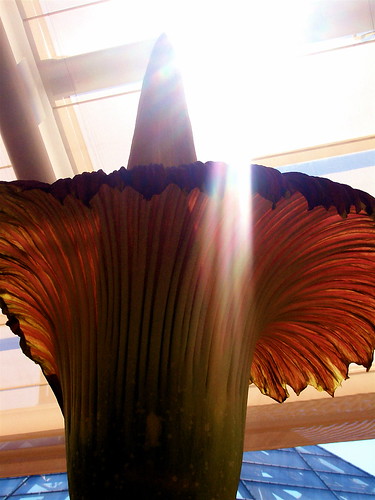
back in the day, governesses wouldn't allow young women to "look upon it" because it resembled a huge sword of a penis with a red upturned collar -- which is what the end of its latin name means, anyway.

everyone was sort of transfixed by it. there it was at the far end of a warm and sunny greenhouse, roped off in a big clay pot, stretching its way toward the ceiling, with cameras capturing every nanosecond of growth so everyone in cyberspace could be there, too. the thing that had me mesmerized was the fact that i was seeing something truly extrordinary, something that i probably would never have known -- unless i was wandering through the jungle in malaysia.
it seemed such a rare moment -- to see a gigantic parasite plant from southeast asia that hadn't bloomed in new york city since 1937. experiencing this kind of thing is why i wanted to live in the city in the first place. impulsively, i suggested that we go and see it for ourselves. the next thing i knew, we were there and i was face to face with this huge flower. it was massive and breathtakingly beautiful. and yes, there was a slight funky smell in the room. like someone hadn't taken out the garbage yet.
back in the day, governesses wouldn't allow young women to "look upon it" because it resembled a huge sword of a penis with a red upturned collar -- which is what the end of its latin name means, anyway.
everyone was sort of transfixed by it. there it was at the far end of a warm and sunny greenhouse, roped off in a big clay pot, stretching its way toward the ceiling, with cameras capturing every nanosecond of growth so everyone in cyberspace could be there, too. the thing that had me mesmerized was the fact that i was seeing something truly extrordinary, something that i probably would never have known -- unless i was wandering through the jungle in malaysia.
Friday, August 11, 2006
Todd The Merman
My friend and I were at his place in Chinatown when someone rang the doorbell. I looked at him and told him that in the ghetto that is Harlem, you don’t answer the door unless you know who it is. He reminded me that his neighborhood is as much of a tourist trap and a ghetto as mine and thought that what I said was good advice. After mentally running through the short list of who it might be, opted to not answer. A few moments later, there was a knock on the door. We looked at each other, then he went to at least look through the peephole. Surprise, surprise – it was his friend Todd, fresh from Michigan by way of a long stint in New Mexico. He literally just got in. We decided to take him uptown with us for dinner at Acapulco Caliente, our favorite spot for Mexican food. (It’s really outstanding food – and this is coming from an honorary Texan, so you can trust me.)
Afterwards, we did what we always do after a big meal – we went for a long walk. We decided to take Todd to a place he’d probably never seen before: the Cherry Walk that runs along the west side highway. We walked down Broadway to W. 124th and veered right. As we got closer to the gas station, we noticed a lot of really cool vintage cars from the 70’s parked across from The Cotton Club. As it turns out, Universal was to shoot a movie called American Gangster the next day. Someone had styled out the gas station to look 70’s appropriate, right down to the valvoline cans, even the colorful spinning butterfly flaps on the wires high above us. I made a note to check IMDB for details as we trudged along to the water’s edge.
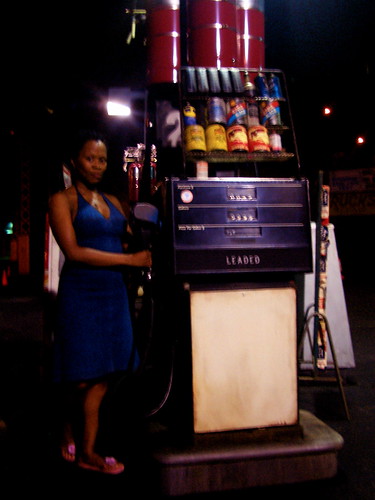
In no time at all, the three of us found a cement block to sit on. As we talked and gazed at the stars, Todd began to wiggle his way off of the block and onto the expanse of rocks that stretched out all the way to the Washington Bridge. Don’t do that, I said as he began to shift and lower himself onto the rocks. Mere seconds later after he scraped his hands, he laughed good-naturedly and said, you told me not to do that, didn’t you. He perched himself on the rocks and the three of us admired the way New Jersey glittered before us and continued to chat about everything and nothing.
That’s when a strange thing happened. Todd began to take off all of his clothes.
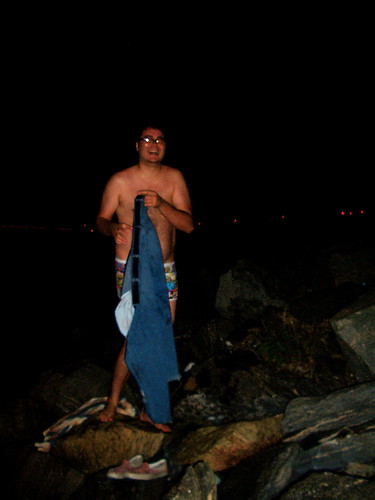
Now what he was doing wasn’t really all that strange to me. I’ve seen people skinny dip before. I’ve certainly done it. But that was my crazy college years in the South, people. That was Austin, Texas – the nation’s capital. They have swimming holes that are designated for people who want to strip and dive in, if they feel so inclined -- clean waters, waters that aren’t polluted and filthy and just flat-out wrong. What’s bizarre is that on our way to this particular spot, we had a conversation about how the city was considering not cleaning up the toxic waste at the bottom of the river that’s been there since way before the Carter administration because stirring it up would make the waters vile, and how they were pretty nasty anyway but cleaner than it was when they started dumping the filth. And there’s a lot of good sediment in there, some 30 years worth. But it’s lying over all the bad gunk, so in the long run how good is it really?
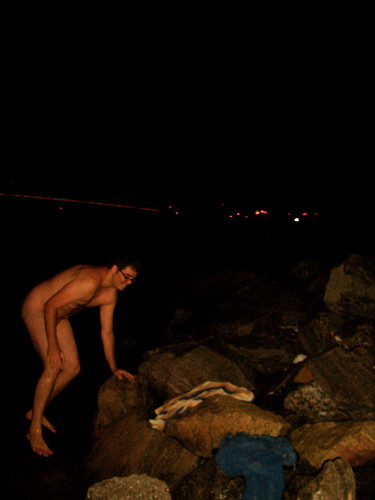
Don’t do that, my friend said as Todd started to get in, because if anything happens to you, I’ll have to jump in and get you. Oh, no you won’t, I said flatly. You’re not getting in that water. He’s grown, that’s his choice.
And off he went.
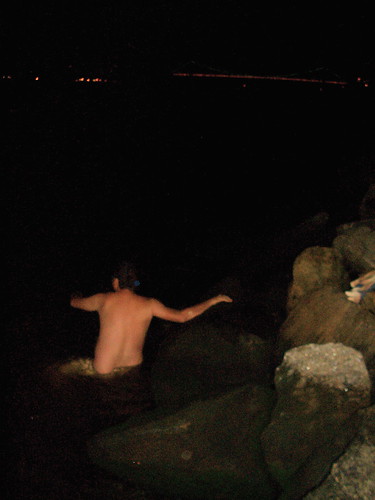
I’m not such a prude that, if the weather was hot enough and if I were with the right group of friends, I wouldn’t take my clothes off and dive in. I have been to nude beaches up here but this – skinny-dipping in the Hudson River! – was different. I have never seen anyone do this up here, probably because I’ve never seen water that’s clean enough (or far away enough from the prying eyes of the public) to really pull it off. I think I was in shock. I wanted him to stop so I pulled out my digitalcamera and started taking pictures. He didn’t like this – “Hey! Don’t take any pictures of my junk!” – but it didn’t deter him. Not in the least. Even when he saw what we were sitting on – the flat end of a gigantic cement pipeline that spewed green filth and goo into the river – he still didn’t climb out.
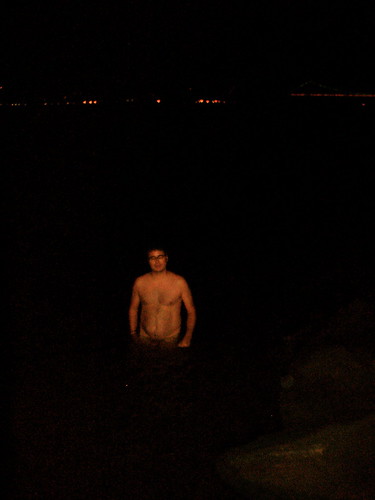
Then again, this is the guy that rode his bike to Iowa in three weeks from New York City and instead of getting a hotel room when he got tired, he slept on the side of the road. (Weren’t you afraid that someone would kill you, I asked. My friend laughed and said, People probably thought that he was the killer. Point taken.) This is the guy that’s been living in the forest in New Mexico in a converted school bus with his girlfriend for the past year or so. (What’d you do for a toilet, I asked over dinner. Well, he began good-naturedly, we had a shovel back in the woods with a roll of toilet paper at the end of it.) This is the guy whose idea of camping with his girlfriend is to get on bikes, ride until they’re both exhausted, then find a Denny’s so they can get some cardboard boxes out back, flatten them and sleep on them. When they got there, his girlfriend was like, so I guess there’s not going to be any marshmallows, huh. She was beyond angry. She was incensed. (After he told this one, I turned to my friend and said, We are sooooo never going camping.)
When I told Todd that sleeping at rest stops was a dangerous thing to do, he raised his eyebrows slightly and asked, really? and he wasn't kidding. After listening to one fearless yarn after another, i realized that he's like the Robert Duvall character in Apocalypse Now, the one that the narrator predicted would leave the war without a scratch on him.
I used to know a lot of guys like Todd when I lived in Austin. I wonder what they're doing now?
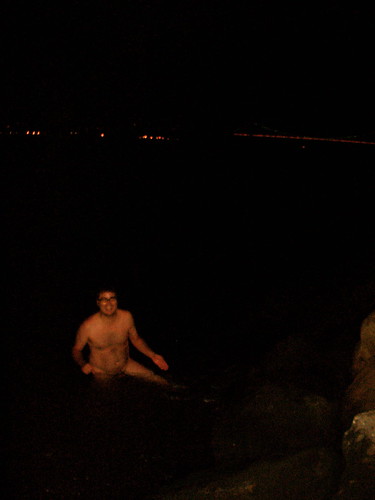
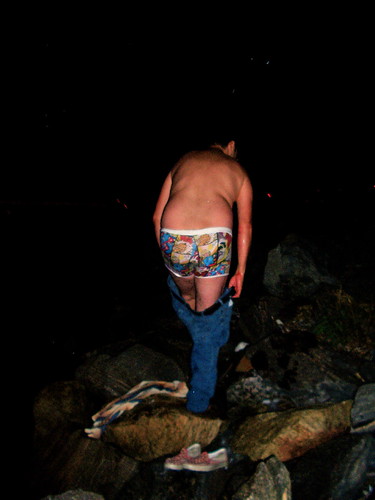
I told him that I was going to blog the photos but he seemed more excited and pleased by the fact that my friend’s mother would probably get to see his Fantastic Four underwear than any subsequent embarrassment he might feel about taking his little midnight swim in delecto flagrante. So here it is.
Now that his little playmate is back from the southwest, I have no idea what my friend is going to turn into. Not that he would ever jump into the East River. I just don’t want him to be an accessory after the fact to any of Todd’s nutty shenanigans. On second thought, it’s too late. As of last night, we both are.
Afterwards, we did what we always do after a big meal – we went for a long walk. We decided to take Todd to a place he’d probably never seen before: the Cherry Walk that runs along the west side highway. We walked down Broadway to W. 124th and veered right. As we got closer to the gas station, we noticed a lot of really cool vintage cars from the 70’s parked across from The Cotton Club. As it turns out, Universal was to shoot a movie called American Gangster the next day. Someone had styled out the gas station to look 70’s appropriate, right down to the valvoline cans, even the colorful spinning butterfly flaps on the wires high above us. I made a note to check IMDB for details as we trudged along to the water’s edge.
In no time at all, the three of us found a cement block to sit on. As we talked and gazed at the stars, Todd began to wiggle his way off of the block and onto the expanse of rocks that stretched out all the way to the Washington Bridge. Don’t do that, I said as he began to shift and lower himself onto the rocks. Mere seconds later after he scraped his hands, he laughed good-naturedly and said, you told me not to do that, didn’t you. He perched himself on the rocks and the three of us admired the way New Jersey glittered before us and continued to chat about everything and nothing.
That’s when a strange thing happened. Todd began to take off all of his clothes.
Now what he was doing wasn’t really all that strange to me. I’ve seen people skinny dip before. I’ve certainly done it. But that was my crazy college years in the South, people. That was Austin, Texas – the nation’s capital. They have swimming holes that are designated for people who want to strip and dive in, if they feel so inclined -- clean waters, waters that aren’t polluted and filthy and just flat-out wrong. What’s bizarre is that on our way to this particular spot, we had a conversation about how the city was considering not cleaning up the toxic waste at the bottom of the river that’s been there since way before the Carter administration because stirring it up would make the waters vile, and how they were pretty nasty anyway but cleaner than it was when they started dumping the filth. And there’s a lot of good sediment in there, some 30 years worth. But it’s lying over all the bad gunk, so in the long run how good is it really?
Don’t do that, my friend said as Todd started to get in, because if anything happens to you, I’ll have to jump in and get you. Oh, no you won’t, I said flatly. You’re not getting in that water. He’s grown, that’s his choice.
And off he went.
I’m not such a prude that, if the weather was hot enough and if I were with the right group of friends, I wouldn’t take my clothes off and dive in. I have been to nude beaches up here but this – skinny-dipping in the Hudson River! – was different. I have never seen anyone do this up here, probably because I’ve never seen water that’s clean enough (or far away enough from the prying eyes of the public) to really pull it off. I think I was in shock. I wanted him to stop so I pulled out my digitalcamera and started taking pictures. He didn’t like this – “Hey! Don’t take any pictures of my junk!” – but it didn’t deter him. Not in the least. Even when he saw what we were sitting on – the flat end of a gigantic cement pipeline that spewed green filth and goo into the river – he still didn’t climb out.
Then again, this is the guy that rode his bike to Iowa in three weeks from New York City and instead of getting a hotel room when he got tired, he slept on the side of the road. (Weren’t you afraid that someone would kill you, I asked. My friend laughed and said, People probably thought that he was the killer. Point taken.) This is the guy that’s been living in the forest in New Mexico in a converted school bus with his girlfriend for the past year or so. (What’d you do for a toilet, I asked over dinner. Well, he began good-naturedly, we had a shovel back in the woods with a roll of toilet paper at the end of it.) This is the guy whose idea of camping with his girlfriend is to get on bikes, ride until they’re both exhausted, then find a Denny’s so they can get some cardboard boxes out back, flatten them and sleep on them. When they got there, his girlfriend was like, so I guess there’s not going to be any marshmallows, huh. She was beyond angry. She was incensed. (After he told this one, I turned to my friend and said, We are sooooo never going camping.)
When I told Todd that sleeping at rest stops was a dangerous thing to do, he raised his eyebrows slightly and asked, really? and he wasn't kidding. After listening to one fearless yarn after another, i realized that he's like the Robert Duvall character in Apocalypse Now, the one that the narrator predicted would leave the war without a scratch on him.
I used to know a lot of guys like Todd when I lived in Austin. I wonder what they're doing now?
I told him that I was going to blog the photos but he seemed more excited and pleased by the fact that my friend’s mother would probably get to see his Fantastic Four underwear than any subsequent embarrassment he might feel about taking his little midnight swim in delecto flagrante. So here it is.
Now that his little playmate is back from the southwest, I have no idea what my friend is going to turn into. Not that he would ever jump into the East River. I just don’t want him to be an accessory after the fact to any of Todd’s nutty shenanigans. On second thought, it’s too late. As of last night, we both are.
Tuesday, August 08, 2006
Why White People Are Afraid
now, this is something that hardly ever gets talked about in the media -- and when the subject is bandied about, it's hardly ever white people that are leading the discussion.
---------------------------------------------------------------------------
by Robert Jensen, AlterNet
It may seem self-indulgent to talk about the fears of white people in a white-supremacist society. After all, what do white people really have to be afraid of in a world structured on white privilege? It may be self-indulgent, but it's critical to understand because these fears are part of what keeps many white people from confronting ourselves and the system.
The first, and perhaps most crucial, fear is that of facing the fact that some of what we white people have is unearned. It's a truism that we don't really make it on our own; we all have plenty of help to achieve whatever we achieve. That means that some of what we have is the product of the work of others, distributed unevenly across society, over which we may have little or no control individually. No matter how hard we work or how smart we are, we all know -- when we are honest with ourselves -- that we did not get where we are by merit alone. And many white people are afraid of that fact.
A second fear is crasser: White people's fear of losing what we have -- literally the fear of losing things we own if at some point the economic, political, and social systems in which we live become more just and equitable. That fear is not completely irrational; if white privilege -- along with the other kinds of privilege many of us have living in the middle class and above in an imperialist country that dominates much of the rest of the world -- were to evaporate, the distribution of resources in the United States and in the world would change, and that would be a good thing. We would have less. That redistribution of wealth would be fairer and more just. But in a world in which people have become used to affluence and material comfort, that possibility can be scary.
A third fear involves a slightly different scenario -- a world in which non-white people might someday gain the kind of power over whites that whites have long monopolized. One hears this constantly in the conversation about immigration, the lingering fear that somehow "they" (meaning not just Mexican-Americans and Latinos more generally, but any non-white immigrants) are going to keep moving to this country and at some point become the majority demographically.
Even though whites likely can maintain a disproportionate share of wealth, those numbers will eventually translate into political, economic, and cultural power. And then what? Many whites fear that the result won't be a system that is more just, but a system in which white people become the minority and could be treated as whites have long treated non-whites. This is perhaps the deepest fear that lives in the heart of whiteness. It is not really a fear of non-white people. It's a fear of the depravity that lives in our own hearts: Are non-white people capable of doing to us the barbaric things we have done to them?
A final fear has probably always haunted white people but has become more powerful since the society has formally rejected overt racism: The fear of being seen, and seen-through, by non-white people. Virtually every white person I know, including white people fighting for racial justice and including myself, carries some level of racism in our minds and hearts and bodies. In our heads, we can pretend to eliminate it, but most of us know it is there. And because we are all supposed to be appropriately anti-racist, we carry that lingering racism with a new kind of fear: What if non-white people look at us and can see it? What if they can see through us? What if they can look past our anti-racist vocabulary and sense that we still don't really know how to treat them as equals? What if they know about us what we don't dare know about ourselves? What if they can see what we can't even voice?
I work in a large university with a stated commitment to racial justice. All of my faculty colleagues, even the most reactionary, have a stated commitment to racial justice. And yet the fear is palpable.
It is a fear I have struggled with, and I remember the first time I ever articulated that fear in public. I was on a panel with several other professors at the University of Texas discussing race and politics in the O.J. Simpson case. Next to me was an African American professor. I was talking about media; he was talking about the culture's treatment of the sexuality of black men. As we talked, I paid attention to what was happening in me as I sat next to him. I felt uneasy. I had no reason to be uncomfortable around him, but I wasn't completely comfortable. During the question-and-answer period -- I don't remember what question sparked my comment -- I turned to him and said something like, "It's important to talk about what really goes on between black and white people in this country. For instance, why am I feeling afraid of you? I know I have no reason to be afraid, but I am. Why is that?"
My reaction wasn't a crude physical fear, not some remnant of being taught that black men are dangerous (though I have had such reactions to black men on the street in certain circumstances). Instead, I think it was that fear of being seen through by non-white people, especially when we are talking about race. In that particular moment, for a white academic on an O.J. panel, my fear was of being exposed as a fraud or some kind of closet racist.
Even if I thought I knew what I was talking about and was being appropriately anti-racist in my analysis, I was afraid that some lingering trace of racism would show through, and that my black colleague would identify it for all in the room to see. After I publicly recognized the fear, I think I started to let go of some of it. Like anything, it's a struggle. I can see ways in which I have made progress. I can see that in many situations I speak more freely and honestly as I let go of the fear. I make mistakes, but as I become less terrified of making mistakes I find that I can trust my instincts more and be more open to critique when my instincts are wrong.
Robert Jensen is a journalism professor at the University of Texas at Austin. He is the author of, most recently, The Heart of Whiteness: Confronting Race, Racism and White Privilege (City Lights Books), from which this essay is excerpted.
© 2006 Independent Media Institute. All rights reserved.
---------------------------------------------------------------------------
by Robert Jensen, AlterNet
It may seem self-indulgent to talk about the fears of white people in a white-supremacist society. After all, what do white people really have to be afraid of in a world structured on white privilege? It may be self-indulgent, but it's critical to understand because these fears are part of what keeps many white people from confronting ourselves and the system.
The first, and perhaps most crucial, fear is that of facing the fact that some of what we white people have is unearned. It's a truism that we don't really make it on our own; we all have plenty of help to achieve whatever we achieve. That means that some of what we have is the product of the work of others, distributed unevenly across society, over which we may have little or no control individually. No matter how hard we work or how smart we are, we all know -- when we are honest with ourselves -- that we did not get where we are by merit alone. And many white people are afraid of that fact.
A second fear is crasser: White people's fear of losing what we have -- literally the fear of losing things we own if at some point the economic, political, and social systems in which we live become more just and equitable. That fear is not completely irrational; if white privilege -- along with the other kinds of privilege many of us have living in the middle class and above in an imperialist country that dominates much of the rest of the world -- were to evaporate, the distribution of resources in the United States and in the world would change, and that would be a good thing. We would have less. That redistribution of wealth would be fairer and more just. But in a world in which people have become used to affluence and material comfort, that possibility can be scary.
A third fear involves a slightly different scenario -- a world in which non-white people might someday gain the kind of power over whites that whites have long monopolized. One hears this constantly in the conversation about immigration, the lingering fear that somehow "they" (meaning not just Mexican-Americans and Latinos more generally, but any non-white immigrants) are going to keep moving to this country and at some point become the majority demographically.
Even though whites likely can maintain a disproportionate share of wealth, those numbers will eventually translate into political, economic, and cultural power. And then what? Many whites fear that the result won't be a system that is more just, but a system in which white people become the minority and could be treated as whites have long treated non-whites. This is perhaps the deepest fear that lives in the heart of whiteness. It is not really a fear of non-white people. It's a fear of the depravity that lives in our own hearts: Are non-white people capable of doing to us the barbaric things we have done to them?
A final fear has probably always haunted white people but has become more powerful since the society has formally rejected overt racism: The fear of being seen, and seen-through, by non-white people. Virtually every white person I know, including white people fighting for racial justice and including myself, carries some level of racism in our minds and hearts and bodies. In our heads, we can pretend to eliminate it, but most of us know it is there. And because we are all supposed to be appropriately anti-racist, we carry that lingering racism with a new kind of fear: What if non-white people look at us and can see it? What if they can see through us? What if they can look past our anti-racist vocabulary and sense that we still don't really know how to treat them as equals? What if they know about us what we don't dare know about ourselves? What if they can see what we can't even voice?
I work in a large university with a stated commitment to racial justice. All of my faculty colleagues, even the most reactionary, have a stated commitment to racial justice. And yet the fear is palpable.
It is a fear I have struggled with, and I remember the first time I ever articulated that fear in public. I was on a panel with several other professors at the University of Texas discussing race and politics in the O.J. Simpson case. Next to me was an African American professor. I was talking about media; he was talking about the culture's treatment of the sexuality of black men. As we talked, I paid attention to what was happening in me as I sat next to him. I felt uneasy. I had no reason to be uncomfortable around him, but I wasn't completely comfortable. During the question-and-answer period -- I don't remember what question sparked my comment -- I turned to him and said something like, "It's important to talk about what really goes on between black and white people in this country. For instance, why am I feeling afraid of you? I know I have no reason to be afraid, but I am. Why is that?"
My reaction wasn't a crude physical fear, not some remnant of being taught that black men are dangerous (though I have had such reactions to black men on the street in certain circumstances). Instead, I think it was that fear of being seen through by non-white people, especially when we are talking about race. In that particular moment, for a white academic on an O.J. panel, my fear was of being exposed as a fraud or some kind of closet racist.
Even if I thought I knew what I was talking about and was being appropriately anti-racist in my analysis, I was afraid that some lingering trace of racism would show through, and that my black colleague would identify it for all in the room to see. After I publicly recognized the fear, I think I started to let go of some of it. Like anything, it's a struggle. I can see ways in which I have made progress. I can see that in many situations I speak more freely and honestly as I let go of the fear. I make mistakes, but as I become less terrified of making mistakes I find that I can trust my instincts more and be more open to critique when my instincts are wrong.
Robert Jensen is a journalism professor at the University of Texas at Austin. He is the author of, most recently, The Heart of Whiteness: Confronting Race, Racism and White Privilege (City Lights Books), from which this essay is excerpted.
© 2006 Independent Media Institute. All rights reserved.
Tuesday, August 01, 2006
size matters
this new york times article seems to sum up the real reason why i'm getting lots of callbacks but not landing those commercials: i'm not physically large enough to fit into anyone's stereotype on madison avenue of what a black woman is. evidently, being an overweight black female means that you're sassy, controlling, aggressive. God help me, i'm only a size 6! a few months ago, my manager told me that if i weighed 75 more pounds, i'd work all the time. i think i'm starting to believe him.
there's no way that anyone would look at me and see any of those things -- although admittedly, sometimes being black and female is enough. i don't really want to get into all of the stereotypes these images resurrect and in some cases, reinforce -- and how those things undermine us socially. we'll have to chat about that some other time. it's too enormous.
-------------------------------------------------------------

there's no way that anyone would look at me and see any of those things -- although admittedly, sometimes being black and female is enough. i don't really want to get into all of the stereotypes these images resurrect and in some cases, reinforce -- and how those things undermine us socially. we'll have to chat about that some other time. it's too enormous.
-------------------------------------------------------------
An Image Popular in Films Raises Some Eyebrows in Ads
Portrayals of black women in a current Universal Studios ad.
At 200 pounds plus — most of that pure attitude — she is hard to miss.

Her onscreen presence takes on many variations, but she is easily recognizable by a few defining traits. Other than her size, she is almost always black. She typically finds herself in an exchange that is either confrontational or embarrassing. And her best line is often little more than a sassy “Mmmm hmmm.”
This caricature, playing on stereotypes of heavy black women as boisterous and sometimes aggressive, has been showing up for some time in stand-up comedy routines and in movies like “Big Momma’s House’’ and “Diary of a Mad Black Woman.’’ Often, the pieces are produced by directors and writers who are black themselves.
With black creators giving more acceptability to the image, it is now starting to appear more often in television commercials as well. Most recently some variation of this character has appeared in commercials for Dairy Queen, Universal Studios and Captain Morgan rum.
But despite the popularity of such characters among blacks, the use of the image of big black women as the target of so many jokes is troublesome to some marketers and media scholars.
“It is perpetuating a stereotype that black females are strong, aggressive, controlling people,’’ said Tommy E. Whittler, a marketing professor at DePaul University. “I don’t think you want to do that.’’
To be sure, sassy overweight black women appear to represent only a small fraction of the African-American actresses who appear in commercials. Marketers have made strides in recent years toward making advertisements with a more diverse cast of characters.
Blacks regularly appear in commercials selling products as diverse as toothpaste, credit cards and erectile dysfunction medication. Indeed, according to several academic studies, over the last 15 years the number of blacks appearing in commercials has been roughly proportional to their share of the American population, about 14 percent.
“Over the years it’s evolved,’’ said Fay Ferguson, co-chief executive of Burrell Communications, an advertising agency that specializes in marketing toward black consumers. “We’ve come a long way in how we see black women in advertising.’’
Stereotypical portrayals of blacks in commercials have drawn criticism from civil rights groups for decades. Some of the earliest and most iconic examples of blacks in advertising — Rastus the Cream of Wheat chef, Aunt Jemima, Uncle Ben — showed blacks in subservient roles that recalled the days of slavery.
Those images have been toned down over the years (Aunt Jemima’s red bandanna, for example, was replaced with pearl earrings and a lace collar in 1989) and are no longer as overtly stereotypical as they once were. And now there are many examples of blacks presented in middle-class settings and engaged in mainstream activities.
To some, the freer use of overweight black women in comic situations suggests a welcome change that reflects a broader acceptability of blacks in the media. But others find the recurring use of the image a return to a disturbing past.
And some say these images may serve to exacerbate misunderstanding between whites and blacks.
“Not only are we being given images of who we are supposed to be, but others are also formulating their images of us based on that,” said Marilyn Kern Foxworth, an author and marketing expert who studies how blacks are portrayed in advertising. “People have already determined who we are and how we’re going to react in certain situations.”
The heavy black female makes one of her latest appearances in a commercial for the Dairy Queen Blizzard. In the spot, a man boarding an airplane sets his ice cream shake down so he can load his bag into an overhead compartment. As he reaches up, another passenger on the plane starts eating the Blizzard. Seeing this, the first man lets go of his bag so he can reclaim his Blizzard and inadvertently drops his luggage on another passenger’s head.
That unlucky passenger happens to be an overweight black woman who lets out an irritated gasp that reminds all the passengers around her who not to mess with.
Rick Cusato, executive vice president for Grey Worldwide, the firm that wrote the campaign for Dairy Queen, said the script was not written with a black actress in mind.
“We basically cast the funniest person,” he said. “We didn’t specifically cast for a black woman. We said, ‘Wow, she’s really funny.’ And she happened to be black.”
Another new Dairy Queen commercial features a similar character — played by the same actress — working as an airport security screener. When a man tries to walk through a metal detector eating a Dairy Queen burger, her eyes dart disapprovingly downward at him. Then she barks, “Uh, uh. Get on!” directing him to walk through again.

Michael Keller, Dairy Queen’s chief brand officer, said the company considered actors of all sizes and races before making a decision. “We looked at male body builders, really big tall women. We looked at just about everybody we could,” he said. “She projected an image that was everything we wanted it to be. This is just a strong woman being herself.” He added that the company had not received any complaints about the ads being racially insensitive. But to some these images are troubling.
“It’s not an accident that she’s African-American and heavy,” said Howard Buford, founder and chief executive of Prime Access, an advertising agency that creates commercials marketed toward minority audiences. “There’s certainly a long heritage of large African-American women who are kind of sassy and feisty and humorously angry. There’s a sense that this whole value system is O.K. again.”
Large black actresses have had recurring roles in commercials over the years, and often are cast in roles where their aggressiveness is a defining trait. The heavy black spokeswoman for Pine Sol was one of the first to embrace the role. Her aggression was aimed at household dirt, however, not people. In a recent commercial for Captain Morgan rum, a large black woman berates her man for playing dominoes and making her late.
In one recent Twix commercial, a full-figured black woman asks her boyfriend if her pants make her rear end look big. As the camera focuses on her plump backside (exaggerated by the camera for effect), the man stuffs his face with a Twix bar and mumbles an indecipherable answer.
Pleased with his response, the woman walks away. She is not shown being aggressive or loud, but the commercial leaves the impression that if the man had given the wrong answer, she might have erupted.
A series of Universal Studios commercials star a heavy black woman who is accompanying her children on a Jurassic Park ride. Frightened by the ride, she roars and buries the heads of her two young children in her bosom.
Black advertising executives have noticed the stereotype.
“There’s an image out there of black women being boisterous, overbearing, controlling and extremely aggressive in their behavior,” said Carol H. Williams, who runs her own advertising firm in Oakland, Calif., that specializes in marketing toward blacks. “I really don’t know why that stereotype is laughed at.”
Some have trouble with the new commercial images in part because they are being created by white writers.
“There are images of African-Americans created for white people by white people and there are images of African-Americans created for African-Americans,’’ Mr. Buford said. “And there’s a big difference.”
The lack of diversity on Madison Avenue has been a long-standing issue. In fact, the New York City Commission on Human Rights is investigating the hiring practices of advertising agencies in the city and is looking at how they have approached employing blacks.
Jannette L. Dates, dean of the communications school at Howard University, said that while whites and blacks could watch the same portrayal of a large black woman on television and laugh, they are laughing for different reasons.
Some whites, Ms. Dates said, may laugh thinking, “Wow, she’s so ridiculous. My people aren’t like that.” She added: “They wouldn’t consciously feel that way. But there is something going on subconsciously because that’s what advertising is all about. They’re trying to tap into some feeling, some emotion, some psychological hang-up.”
Blacks, meanwhile, might laugh because they can identify with the character, Ms. Dates said. “It’s for both the people who want to snicker and say, ‘See, that’s how they are.’ And for people to say, ‘There’s one of us.’ ”
Orlando Patterson, a sociology professor at Harvard, amplified that point. “To the black audience, this may be, ‘You do your thing, sister,’ ” Professor Patterson said. “The white audience is laughing with her. Then they go back to reality, and they laugh at her.”
But Liz Gumbinner, a creative director at David and Goliath, the agency that developed the Universal campaign, said the broad appeal of the commercials was proof they were not insensitively playing on racial stereotypes.
Noting that a black woman in a recent David and Goliath focus group spoke up about how much she liked the Universal ads, Ms. Gumbinner said: “I wonder if sometimes when you have somebody that is less conventional, they become the most memorable. We use a lot of bald men, and it’s not like we have it out for bald men.”
Ms. Gumbinner and Mr. Cusato of Grey Advertising, however, said no black writers were involved in either of their campaigns.
As is typically the case with racial stereotypes, who is laughing and why is complex and potentially inflammatory. Black actors and comedians have profited handsomely from creating bumptious female characters on TV and in movies, raising the issue of whether they, too, are perpetuating the stereotypes that many find offensive.
Tyler Perry, the filmmaker and actor, created a series of plays and movies, including the huge hit “Diary of a Mad Black Woman,” in which the main character Mable (Madea) Simmons is a no-nonsense overweight matriarch. Mo’Nique, a full-figured comedian, has built a routine on being outlandish, brash and, at times, downright crude.
Mr. Buford, of Prime Access, said part of what makes the comedy of Mr. Perry and Mo’Nique acceptable is that it is written from a personal experience common to many blacks.
“Authenticity makes a lot of difference,” he said. “It’s authenticity born of having lived that life versus having been cast in that role.”
Tuesday, July 25, 2006
ah, the rainbow room
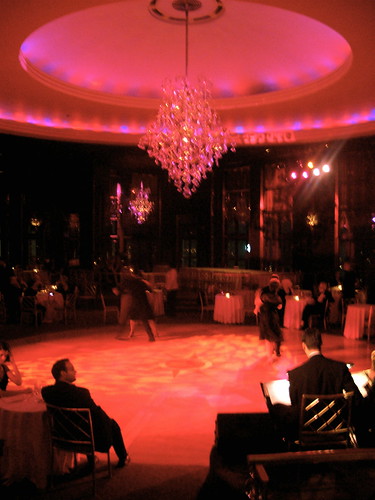
what a fun, cool gig this was.
every friday and saturday night, the rainbow room in rockefeller center features a three course prix-fixe menu provided by cipriani's, along with live music and that incredible revolving dance floor. with such a high dress code, a perfectly sumptuous room and the most beautiful view of the city to accompany it, i was enthralled from the moment i entered the building. to be honest, this wasn't my first time at this particular rodeo. i've been singing there for private parties and galas and such for awhile now. i think i forgot what a glamorous slice of old new york city it truly is. i mean, come on. when you want to dress up and be truly elegant, and dance to a big band that plays standards until one in the morning, where else can you go?
there's a latin band that plays for 20 minutes and there's a big band that plays for 40 minutes, from 8pm - 1am. as the bands change places, the pianist and the bassist play a song or two. that's right. continuous music. on saturday night, i was the replacement girl singer for the big band. that means that i got to show up well-heeled and ready in a rather fetching silk diane von furstenburg dress, change into a beautiful gown eventually and nibble on tasty things like key lime pie and salmon and roasted asparagus all night long until they featured me for two or three standards for each set. whenever i was in doubt about an arrangement, the trumpet player would count me in. it was an audience that knew how to listen as well as dance. some of them come every weekend. that's so gratifying to a singer, to phrase something in a particular way in the middle of a song and have someone respond spontaneously with applause. i was so sad when the evening ended. then again, it made me a little sad to be up so high, anyway. i couldn't stop thinking about the world trade center's windows on the world. that place was such a jewel.
what does it take to make me happy? an adorable little old man in black pants, a crisp snow-white jacket and black bowtie tipping the door of the kitchen open into the makeshift backstage area and stage-whispering "la reina! tuna tartare!" over and over again until i slowly make my way into the kitchen towards a gigantic silver tray of loveliness. boy, i tell you -- it doesn't take much to make me happy.
my satisfaction, on the other hand, is a completely different story.
Saturday, July 22, 2006
it's following me
tonight i went to the bar to say hello to my friend before the burlesque show began. i'm sitting around learning all the girl songs for my gig tomorrow night at the rainbow room and i needed a distraction. the group of people that he works with are a lovely little family and the truth is, i'm a part of it. i used to sing there every week for a few years with jc hopkins, so whenever i go, it's always a warm moment.
while we were all standing around talking, a bouncer from the french place across the street came over to say hi to the regular weekend barback but he was out. lots of casual chit chat ensued, stuff like yeah it was slow last week, oh yeah we're always slow on fridays, it'll pick up soon. stuff like that. there were some honeywagons on allen street and we all wondered aloud as to who was shooting what and where. the bouncer said his goodbyes and left, only to reappear a few minutes later with a bit of strange news: the trailers were there for a disney movie called enchantment, starring jodie foster. (actually, imdb.com says susan sarandon but what do they know? that stuff is always subject to change.) the bouncer was dejected, like someone had popped his balloon. i threw back my head and laughed. welcome to the commodification of the lower east side, i said as i waved my hand in the air. everyone agreed.
it was only a matter of time until hollywood made downtown new york city into a palatable and safe place for middle white america. actually, they've been at it for quite a while. hollywood has to homogenize everything they touch and suck the individuality and uniqueness out of it until it becomes some stereotype that's easy to sell. and make fun of. what's funny to me is, when they do it, they think they're doing you a favor. they don't even realize what they're destroying. the rest of the world would say that's such an american thing to do. and they're right. cultural homogenization. soft power. global media domination. media-cultural imperialism. heck. imperialism, period.
it's like manifest destiny, except the deity in question is money. or media.
my friend said that disney (which epitomizes soft power if you ask me) making movies in this neighborhood is the beginning of the end, and he's right. it was one thing when mickey mouse took over times square -- that was already a tourist trap anyhow and nobody downtown cared. this is different. the lower east side already looks like it's the back end of a portal that begins somewhere in wisconsin. it's been this way for years. these people all look like they're trying to outhip each other and everyone is trying way to hard. they're all so well put together and somehow, they all end up looking exactly alike without ever reflecting any of their individual selves. it's like fashionista garanimals. and that has nothing to do with style, which can never be bought.
williamsburg is even worse.
when i got here in the early 90's, the city was a dangerous place -- and you knew it. you'd get knifed on the street for the loose change that someone thought they heard in your pockets. you could smell the crack on the sidewalk. there were no bistros. there were no boites. there was the bodega on the corner and everybody knew that it was a front, that they were running hard drugs along with everybody else. it was a filthy nasty rat-infested stinkhole and there was nothing fun or cute about it. you didn't live in that neighborhood because you wanted to. you lived there because it was all you could afford -- and as soon as you could do better, you left.
and that's another thing. there were lots of black people, lots of puerto ricans, lots of mexicans, lots of everything except white people, unless they were a junkie or an artist or some other kind of freak-wierdo -- none of whom could be counted on to have any money, ever. i had a friend with a straight job who lived down there and for years, he would dress in jeans and a t-shirt and change into a suit when he got to work, because he knew that if he didn't, somebody would beat him down. if you were white and traipsing through that neighborhood back in the day, and if you looked like you had money, you got your ass kicked. period. that was then. nowadays, it's nothing but white people, practically. the neighborhood looks like some fraternity/sorority mixer just let out, and they're all drunken hopeless fashion victims, with trust funds and/or their parent's money to pay for their lifestyle, culled from everybody's favorite blueprint about this town, sex and the city. i glide past them and i think, is it really this much fun to be drunk in public?
the problem is, this is still new york city. it's still dangerous. the lifestyle and the look of things have lulled people into believing that it's safe. but it will never be completely safe. no big city ever is, especially a place like this. people get killed in this neighborhood for being drunk and thinking they're impervious to danger.
i've got to get out of this city, the bouncer said, shaking his head, to us and to no one in particular. my friend and i looked at each other and smiled knowingly. that's everyone's reigning cry right now. leave the homogenization behind. but then again, isn't that why most of us left the suburbs in the first place? won't it always follow you? isn't that what it does?
while we were all standing around talking, a bouncer from the french place across the street came over to say hi to the regular weekend barback but he was out. lots of casual chit chat ensued, stuff like yeah it was slow last week, oh yeah we're always slow on fridays, it'll pick up soon. stuff like that. there were some honeywagons on allen street and we all wondered aloud as to who was shooting what and where. the bouncer said his goodbyes and left, only to reappear a few minutes later with a bit of strange news: the trailers were there for a disney movie called enchantment, starring jodie foster. (actually, imdb.com says susan sarandon but what do they know? that stuff is always subject to change.) the bouncer was dejected, like someone had popped his balloon. i threw back my head and laughed. welcome to the commodification of the lower east side, i said as i waved my hand in the air. everyone agreed.
it was only a matter of time until hollywood made downtown new york city into a palatable and safe place for middle white america. actually, they've been at it for quite a while. hollywood has to homogenize everything they touch and suck the individuality and uniqueness out of it until it becomes some stereotype that's easy to sell. and make fun of. what's funny to me is, when they do it, they think they're doing you a favor. they don't even realize what they're destroying. the rest of the world would say that's such an american thing to do. and they're right. cultural homogenization. soft power. global media domination. media-cultural imperialism. heck. imperialism, period.
it's like manifest destiny, except the deity in question is money. or media.
my friend said that disney (which epitomizes soft power if you ask me) making movies in this neighborhood is the beginning of the end, and he's right. it was one thing when mickey mouse took over times square -- that was already a tourist trap anyhow and nobody downtown cared. this is different. the lower east side already looks like it's the back end of a portal that begins somewhere in wisconsin. it's been this way for years. these people all look like they're trying to outhip each other and everyone is trying way to hard. they're all so well put together and somehow, they all end up looking exactly alike without ever reflecting any of their individual selves. it's like fashionista garanimals. and that has nothing to do with style, which can never be bought.
williamsburg is even worse.
when i got here in the early 90's, the city was a dangerous place -- and you knew it. you'd get knifed on the street for the loose change that someone thought they heard in your pockets. you could smell the crack on the sidewalk. there were no bistros. there were no boites. there was the bodega on the corner and everybody knew that it was a front, that they were running hard drugs along with everybody else. it was a filthy nasty rat-infested stinkhole and there was nothing fun or cute about it. you didn't live in that neighborhood because you wanted to. you lived there because it was all you could afford -- and as soon as you could do better, you left.
and that's another thing. there were lots of black people, lots of puerto ricans, lots of mexicans, lots of everything except white people, unless they were a junkie or an artist or some other kind of freak-wierdo -- none of whom could be counted on to have any money, ever. i had a friend with a straight job who lived down there and for years, he would dress in jeans and a t-shirt and change into a suit when he got to work, because he knew that if he didn't, somebody would beat him down. if you were white and traipsing through that neighborhood back in the day, and if you looked like you had money, you got your ass kicked. period. that was then. nowadays, it's nothing but white people, practically. the neighborhood looks like some fraternity/sorority mixer just let out, and they're all drunken hopeless fashion victims, with trust funds and/or their parent's money to pay for their lifestyle, culled from everybody's favorite blueprint about this town, sex and the city. i glide past them and i think, is it really this much fun to be drunk in public?
the problem is, this is still new york city. it's still dangerous. the lifestyle and the look of things have lulled people into believing that it's safe. but it will never be completely safe. no big city ever is, especially a place like this. people get killed in this neighborhood for being drunk and thinking they're impervious to danger.
i've got to get out of this city, the bouncer said, shaking his head, to us and to no one in particular. my friend and i looked at each other and smiled knowingly. that's everyone's reigning cry right now. leave the homogenization behind. but then again, isn't that why most of us left the suburbs in the first place? won't it always follow you? isn't that what it does?
Saturday, July 15, 2006
knitting and sweating
To celebrate Kwaanza, you have to make the gifts you give. It’s quite a challenge for those of us who like to run through department stores and boutiques at the last minute, pointing and charging it all while someone else gift wraps it. I’m not that bad (I could never afford to be) but because what I make doesn’t ever last past dinner, I’ve always wanted to aim a little higher. Even though everyone loves what I bring, I still find myself watching someone knitting at a café and wishing that I was craftsy enough to pull it off. I used to love to knit and crochet when I was little and I toyed with the idea of making things when I saw everyone fall into the trend a few years ago but I never did anything about it. Last year, for some strange reason, something in me snapped. I downloaded some instructions online, learned how to knit, joined a knitting circle or two and took a grand stab at a rolltop sweater for a toddler, which has come undone so many times since then, it’s laughable.
As usual, there was a method to my madness. I realize now that I used that sweater to figure out how to read patterns, how to make certain stitches, how to be patient enough to make it consistently pretty and of course, to meet other knitters who would help me whenever I got stuck. Knitting has turned out to be much more time-consuming and expensive than I thought but making beautiful things with my hands this time around will make it all worthwhile. There’s something soothing about sitting with a bunch of people and talking, and having tea and cake. It’s like a little getaway – an unexpected oasis of calm in the middle of the city.
There’s lots of places to go downtown, to sit and knit uninterrupted and have tea. And unbeknownst to me, Harlem has a knitting circle, too. Hm. I may have to crash that little gathering in the very near future.
We’re in the middle of a heat wave but I’m shopping for yarn. I’d like to finish that toddler’s sweater and make one for myself and my friend, who was curious enough to look over my shoulder the other day as I browsed the web for patterns. Thankfully, someone from a knitting collective online pointed me towards websites that sell yarn at wholesale prices. I’m hoping that a chance trip to Walmart this weekend might yield the just-right amount that I need.
In the meantime, I’ve found that if I take my knitting with me, I have plenty of time to make things: on the subway, waiting in line at the bank, riding the bus. I suppose that toting around a shoulder bag filled with woolen yarn is no picnic in this heat – admittedly, I get strange looks sometimes. Then again, someone is always looking at me funny for some reason or another, so I’m completely unfazed.
Life is filled with downtime. I may as well be productive.
As usual, there was a method to my madness. I realize now that I used that sweater to figure out how to read patterns, how to make certain stitches, how to be patient enough to make it consistently pretty and of course, to meet other knitters who would help me whenever I got stuck. Knitting has turned out to be much more time-consuming and expensive than I thought but making beautiful things with my hands this time around will make it all worthwhile. There’s something soothing about sitting with a bunch of people and talking, and having tea and cake. It’s like a little getaway – an unexpected oasis of calm in the middle of the city.
There’s lots of places to go downtown, to sit and knit uninterrupted and have tea. And unbeknownst to me, Harlem has a knitting circle, too. Hm. I may have to crash that little gathering in the very near future.
We’re in the middle of a heat wave but I’m shopping for yarn. I’d like to finish that toddler’s sweater and make one for myself and my friend, who was curious enough to look over my shoulder the other day as I browsed the web for patterns. Thankfully, someone from a knitting collective online pointed me towards websites that sell yarn at wholesale prices. I’m hoping that a chance trip to Walmart this weekend might yield the just-right amount that I need.
In the meantime, I’ve found that if I take my knitting with me, I have plenty of time to make things: on the subway, waiting in line at the bank, riding the bus. I suppose that toting around a shoulder bag filled with woolen yarn is no picnic in this heat – admittedly, I get strange looks sometimes. Then again, someone is always looking at me funny for some reason or another, so I’m completely unfazed.
Life is filled with downtime. I may as well be productive.
Thursday, July 13, 2006
yah-hoo!! i've still got it!
when my friend and i went to acme bar and grill a few weeks ago and had what i considered to be sub-par southern cuisine, he thought it would be fun to make chicken fried steak one night. on sunday, i rose to the challenge -- booting him out of the kitchen, of course and whipping it up from memory inside of an hour. all i could think was, i've still got it.
i'm touchy about chicken fried steak. for years, my friend carlton used to take me to a restaurant on 6th street in austin (long gone, now) called beans for 2 for 1 chicken fried steak night every tuesday. later, i had to make chicken fried steak for a living for what felt like an eternity, at another restaurant further down 6th street called headliner's east. God knows i can make that cream gravy blindfolded, from scratch. God knows i can.
well. they say that nothing learned is ever wasted -- and they were right. all that time spent over that greasy stove making tex-mex specialties wasn't lost at all. i remember everything. there's a file in my head and every recipie i love is in it. ultimately, it's nice to know that i'm the one my texas buddies turn to, when it's time to really eat at home.
...and yes, this particular meal was as delicious as it looks!
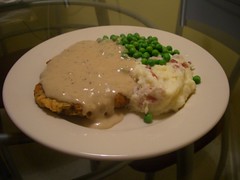
i'm touchy about chicken fried steak. for years, my friend carlton used to take me to a restaurant on 6th street in austin (long gone, now) called beans for 2 for 1 chicken fried steak night every tuesday. later, i had to make chicken fried steak for a living for what felt like an eternity, at another restaurant further down 6th street called headliner's east. God knows i can make that cream gravy blindfolded, from scratch. God knows i can.
well. they say that nothing learned is ever wasted -- and they were right. all that time spent over that greasy stove making tex-mex specialties wasn't lost at all. i remember everything. there's a file in my head and every recipie i love is in it. ultimately, it's nice to know that i'm the one my texas buddies turn to, when it's time to really eat at home.
...and yes, this particular meal was as delicious as it looks!
Subscribe to:
Posts (Atom)